Download this free B2–C1 English worksheet PDF for English learners and teachers. This lesson explores group-chat personalities, social planning, shared responsibility and why apparently simple plans so often fail to happen.
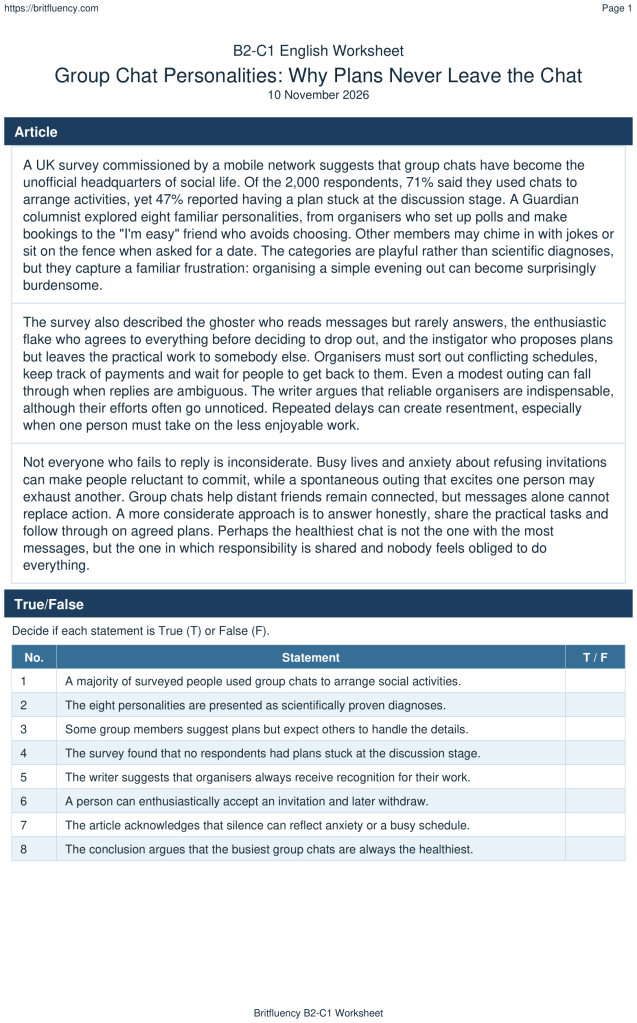
The article examines a UK survey of 2,000 people in which 71% said they used group chats to arrange activities, while 47% reported having a plan stuck at the discussion stage. It also looks at several familiar personalities that can make organising difficult.
Students read about organisers who set up polls and make bookings, friends who sit on the fence when asked to choose a date, and people who chime in with jokes without helping with the practical details.
The worksheet also describes the ghoster who reads messages but rarely replies, the enthusiastic flake who agrees to everything before deciding to drop out, and the instigator who suggests plans but leaves the organising to someone else.
Organisers may have to sort out conflicting schedules, keep track of payments and wait for people to get back to them. Even a simple outing can fall through when replies are unclear or responsibility is unevenly shared.
The article also recognises that silence does not always mean someone is inconsiderate. Busy lives, anxiety and reluctance to refuse invitations can all affect how people respond. The conclusion suggests that healthier group chats depend on honesty, shared responsibility and people actually following through on agreed plans.
Level: B2–C1
Date: 10 November 2026
Focus: Reading comprehension, phrases, vocabulary and discussion about group chats, social responsibility and communication
This free worksheet includes:
- A three-paragraph article about group-chat personalities and why plans often fail to happen
- Eight True/False reading-comprehension questions
- A Phrase Match activity with 10 useful expressions
- A Synonym Match exercise with 10 vocabulary items
- A Use the New Language activity requiring students to write their own sentences
- 16 discussion questions divided between Student A and Student B
- Speaking topics including read receipts, cancelling plans, group pressure, privacy and friendship
- A complete answer key
- Example sentences showing the target phrases in natural contexts
Useful phrases from the worksheet include set up, chime in, sit on the fence, drop out, sort out, keep track of, get back to, fall through, take on and follow through. Students also practise vocabulary such as respondents, burdensome, enthusiastic, ambiguous, reliable, indispensable, resentment, reluctant, spontaneous and considerate.
A central classroom point is the invisible work involved in organising social activities. The worksheet encourages students to discuss whether organisers take on an unfair share of responsibility, how digital communication affects friendships and whether frequent messaging can create an illusion of closeness without real interaction.
Worksheet preview
A2–B2 English Worksheets
B2–C2 English Worksheets
IELTS Practice Materials
Free English Grammar Worksheets PDF
English Listening Lessons
