Download this free B2–C1 English worksheet PDF for English learners and teachers. This lesson explores strong-smelling food at work, cultural assumptions, workplace etiquette and the balance between individual choice and shared comfort.
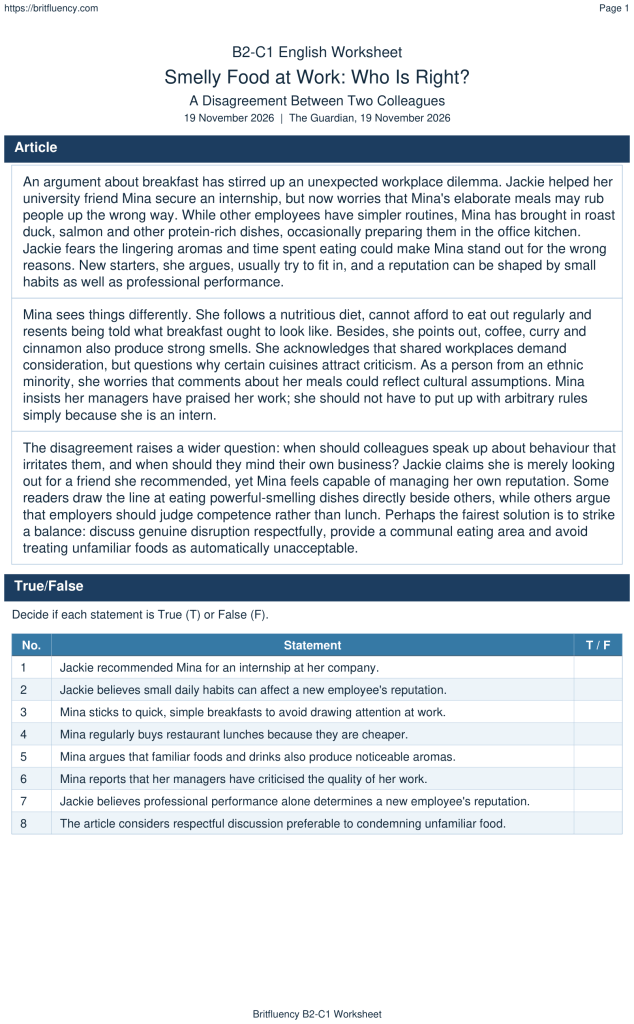
The article describes a disagreement between Jackie and Mina after Jackie helped her university friend secure an internship. Jackie worries that Mina’s elaborate meals, including roast duck and salmon, may rub people up the wrong way and make her stand out for the wrong reasons.
Students examine Mina’s response. She follows a nutritious diet, cannot afford to eat out regularly and resents being told what breakfast should look like. She also points out that coffee, curry and cinnamon can produce strong smells and questions why some cuisines attract more criticism than others.
The worksheet explores the role of cultural assumptions in shared workplaces. Mina worries that comments about her meals may reflect prejudice or unfamiliarity, while Jackie says she is simply looking out for a friend whose reputation could be affected by small habits.
The article then asks when colleagues should speak up about behaviour that genuinely disrupts others and when they should mind their own business. It also considers whether interns should be expected to fit in more than experienced employees.
The final section suggests a compromise. Rather than treating unfamiliar food as automatically unacceptable, workplaces can strike a balance by discussing genuine disruption respectfully and providing communal eating areas.
The discussion section develops these ideas through questions about workplace culture, minority experiences, personal habits, professional reputation and when employers should draw the line.
Level: B2–C1
Date: 19 November 2026
Focus: Reading comprehension, phrases, vocabulary and discussion about workplace etiquette, cultural assumptions and shared spaces
This free worksheet includes:
- A three-paragraph article about strong-smelling food, cultural differences and workplace expectations
- Eight True/False reading-comprehension questions
- A Phrase Match activity with 10 useful expressions
- A Synonym Match exercise with 10 vocabulary items
- A Use the New Language activity requiring students to write their own sentences
- 16 discussion questions divided between Student A and Student B
- Speaking topics including workplace etiquette, cultural respect, personal habits, interns and shared comfort
- A complete answer key
- Example sentences showing the target phrases in natural contexts
Useful phrases from the worksheet include rub people up the wrong way, stand out, fit in, eat out, put up with, speak up, mind your own business, look out for, draw the line and strike a balance. Students also practise vocabulary such as elaborate, lingering, nutritious, consideration, criticism, assumptions, arbitrary, competence, disruption and unacceptable.
A central classroom point is the difference between genuine workplace disruption and personal dislike. The worksheet encourages students to discuss how employers and colleagues can respect cultural differences while still maintaining reasonable standards in shared spaces.
Worksheet preview
A2–B2 English Worksheets
B2–C2 English Worksheets
IELTS Practice Materials
Free English Grammar Worksheets PDF
English Listening Lessons
